
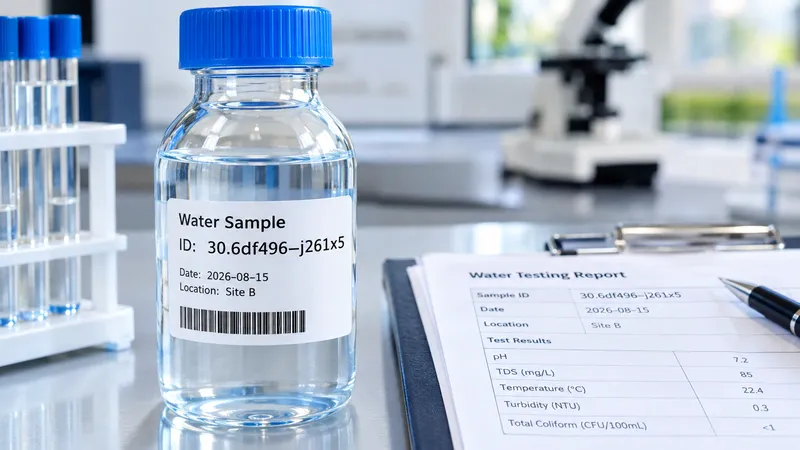
Seeing an unfamiliar combination of numbers and letters can raise a simple question: what does it actually mean? The phrase Water With 30.6df496–j261x5 looks technical, but its format does not match a familiar chemical name, common water additive, or standard ingredient. The most important point is that the code alone does not identify a specific substance. It should be treated as an unidentified reference until its original source provides more information. That distinction helps prevent people from making assumptions about its purpose, safety, or composition.
What Is 30.6df496–j261x5?
The string 30.6df496–j261x5 is an alphanumeric identifier containing numbers, letters, a decimal point, and a separator. Its appearance may make it look like a scientific formula, but appearance alone cannot establish its chemical identity.
Recent online discussions describe similar possibilities, including batch numbers, laboratory sample references, production records, database identifiers, and technical tracking codes. However, these are possible uses rather than a confirmed definition of this particular code.
That is why it is better to focus on where the code came from rather than trying to decode every character.
Why Is Water Mentioned With the Code?
The phrase Water With 30.6df496–j261x5 may connect the identifier with a water-related record, sample, product, test, or technical document.
For example, water appears in many professional processes. Laboratories may assign identification numbers to water samples. Beverage companies may track production batches. Manufacturing facilities may record water-quality tests or processing conditions.
A code appearing beside water therefore does not automatically mean that the code represents something that should be added to water.
The surrounding information is much more useful than the characters themselves.
Is It a Chemical Formula?
There is no reliable evidence that 30.6df496–j261x5 is a recognized chemical formula.
Chemical substances normally have established names, molecular formulas, registry identifiers, or other documented systems for identification. A random-looking alphanumeric string cannot establish molecular structure, concentration, solubility, or chemical behavior on its own.
This matters because incorrectly identifying an unknown code as a chemical could lead to unsafe assumptions.
If you found the term in a laboratory report or technical document, check the document’s glossary, sample information, product description, or reference section before drawing conclusions.
Could It Be a Batch or Sample Code?
Yes, that is one reasonable possibility, although it cannot be confirmed from the code alone.
Businesses and laboratories commonly use identifiers to connect physical materials with digital records. A sample might receive a unique reference so technicians can track its test results. A manufacturing system may assign a code to a particular production run.
For instance, a water-testing laboratory could label a collected sample with an internal reference number. The actual information about pH, minerals, microorganisms, or other measurements would appear elsewhere in the report.
In that situation, the code identifies the record or sample, not the properties of the water itself.
What Should You Do If You Find This Code?
Start with the source.
If you saw Water With 30.6df496–j261x5 on a bottle, package, invoice, laboratory report, website, or device, look at the information immediately before and after the code.
Useful clues include:
- Product or manufacturer name
- LOT or batch number
- Laboratory sample number
- Date and location
- Test name
- Product instructions
- Safety information
- Manufacturer contact details
You can then contact the relevant manufacturer, laboratory, supplier, or organization and ask what the identifier represents.
This approach is more reliable than guessing based on the characters.
Is Water With This Code Safe to Drink?
The code itself cannot establish whether water is safe to drink.
Drinking-water safety depends on factors such as the water source, contaminants, treatment, testing, and applicable health standards. A reference number may help trace a sample or production record, but it does not prove that the water meets safety requirements.
If you encounter an unfamiliar substance or product associated with water, do not consume or mix it simply because someone online describes it as harmless. Verify its identity and follow the manufacturer’s or laboratory’s instructions first.
A Practical Example
Imagine that a water-testing report contains the identifier 30.6df496–j261x5.
It would be a mistake to assume that “30.6” represents a concentration or that the letters represent a particular chemical. The report might instead use the entire string as a sample reference.
The correct way to interpret it would be to locate the report’s sample-identification section and then connect that reference to the actual test results.
This simple example shows why context matters more than the appearance of the code.
Final Takeaway
Water With 30.6df496–j261x5 is best approached as an unusual identifier rather than a confirmed chemical, ingredient, or special type of drinking water. Current online references do not establish one authoritative meaning for the code.
If you encounter it in a real product, laboratory report, or technical record, identify the source and check the surrounding documentation. That is the safest and most accurate way to determine what the code actually represents. For more information, visit our website.